Meeting on the Elbe
American and Soviet forces met near Torgau, Germany, cutting Nazi Germany between the Allied advances from east and west.
REMEMBERING ANTIFASCIST VICTORY · 1945
We remember the defeat of the fascist Axis and honor every Allied soldier and civilian who resisted aggression and defended home and freedom.
Photo: U.S. and Soviet troops meet on the Elbe at Torgau, Germany, April 1945. It reminds us that solidarity across borders can end tyranny.
01 / WHY WE REMEMBER
The Second World War brought immeasurable loss and trauma. Antifascist victory matters because people across nations, communities, and beliefs rejected aggression, racism, and totalitarian rule together.
This page honors the courage of those who resisted, the endurance of survivors rebuilding their lives, and the shared pursuit of a peaceful international order. It does not treat any people or nationality as an enemy.
02 / COURAGE WITHOUT BORDERS
These are real historical photographs. Heroes were not abstractions: they were people who carried fear, loss, and long marches.
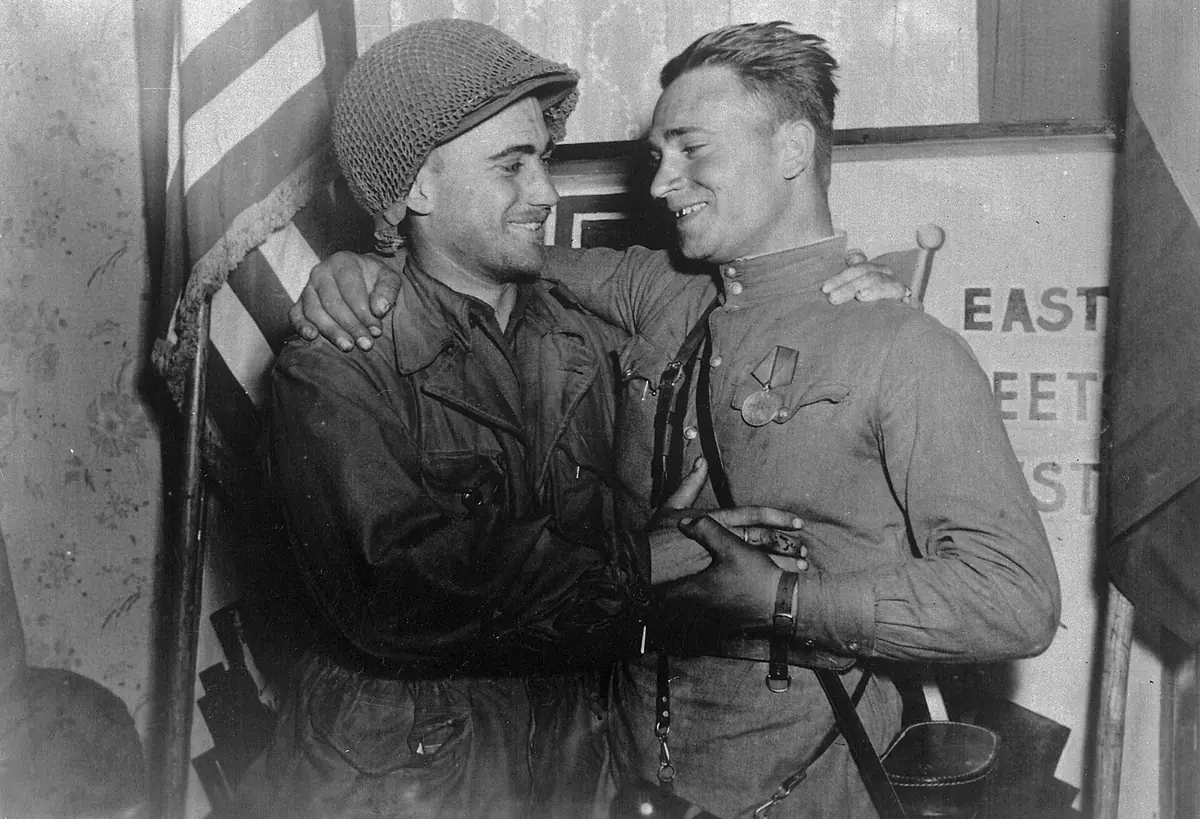
In April 1945, Allied troops advancing from east and west met. It was not one side's triumph, but a moment in the shared defeat of Nazi Germany. View archive
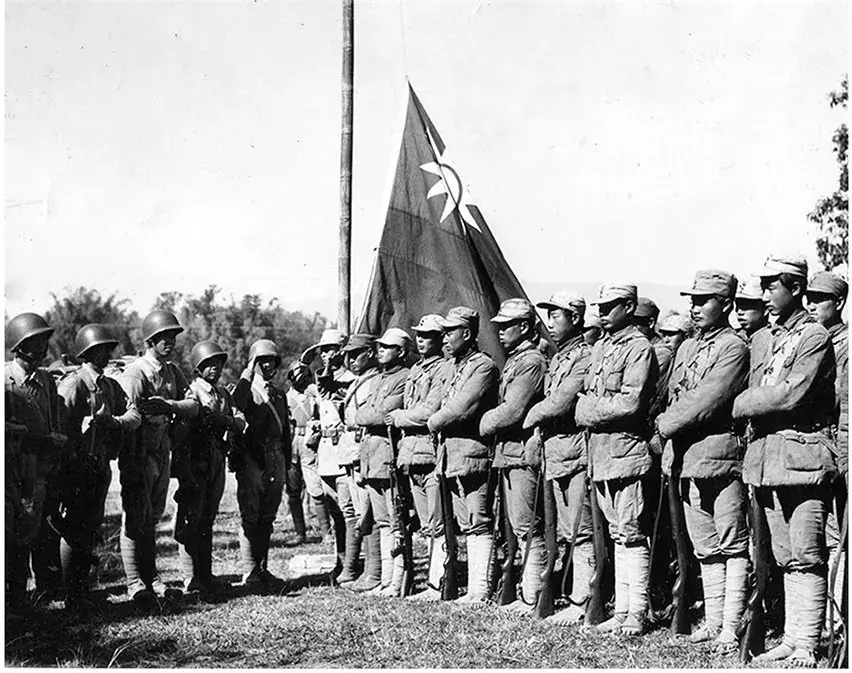
Chinese Expeditionary Force personnel at Mong-Yu, Burma. The long resistance across Asia was indispensable to antifascist victory. View archive
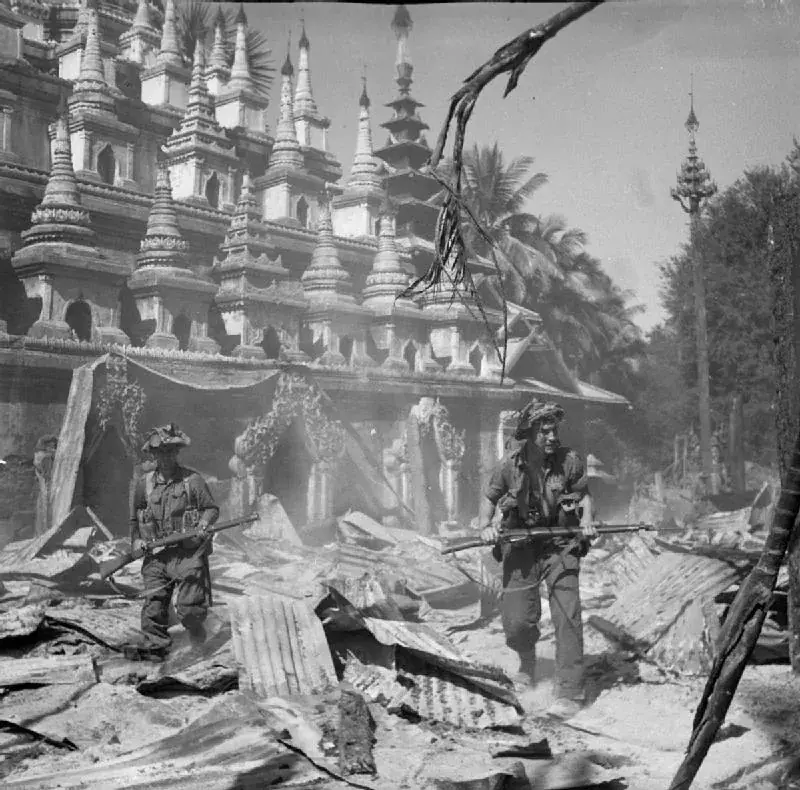
British soldiers patrol the ruins of Bahe. Victory never erased the destruction endured by ordinary people. View archive
03 / THE END OF TYRANNY
American and Soviet forces met near Torgau, Germany, cutting Nazi Germany between the Allied advances from east and west.
Germany's unconditional surrender took effect in Europe. This is widely commemorated as Victory in Europe Day.
Japanese representatives signed the Instrument of Surrender aboard USS Missouri in Tokyo Bay, formally ending the Second World War.
04 / DOCUMENTS OF SURRENDER
For historical accuracy, these are images of Axis surrender, not an “Allied surrender.” The signatures could not heal the wounds, but they marked the end of regimes of aggression and the beginning of reconstruction for survivors.
Explore World War II records at the U.S. National Archives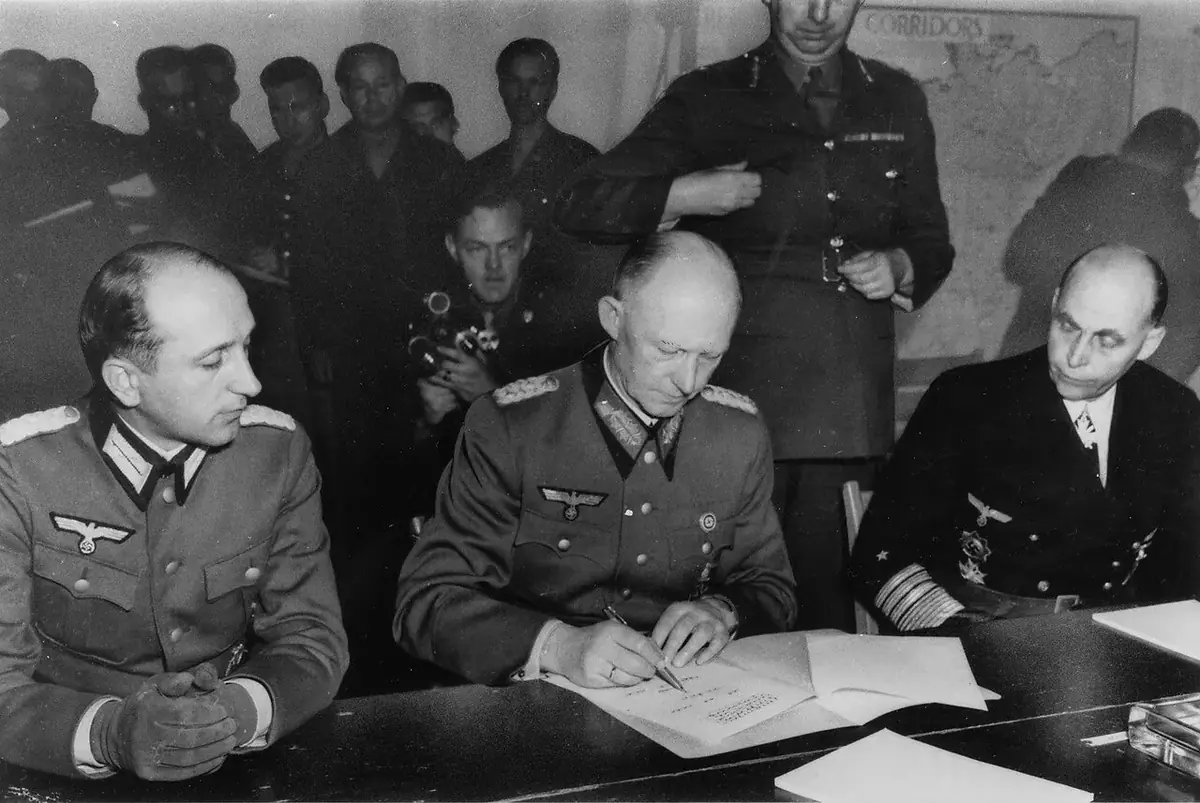
German representative Alfred Jodl signs the instrument of unconditional surrender. View archive
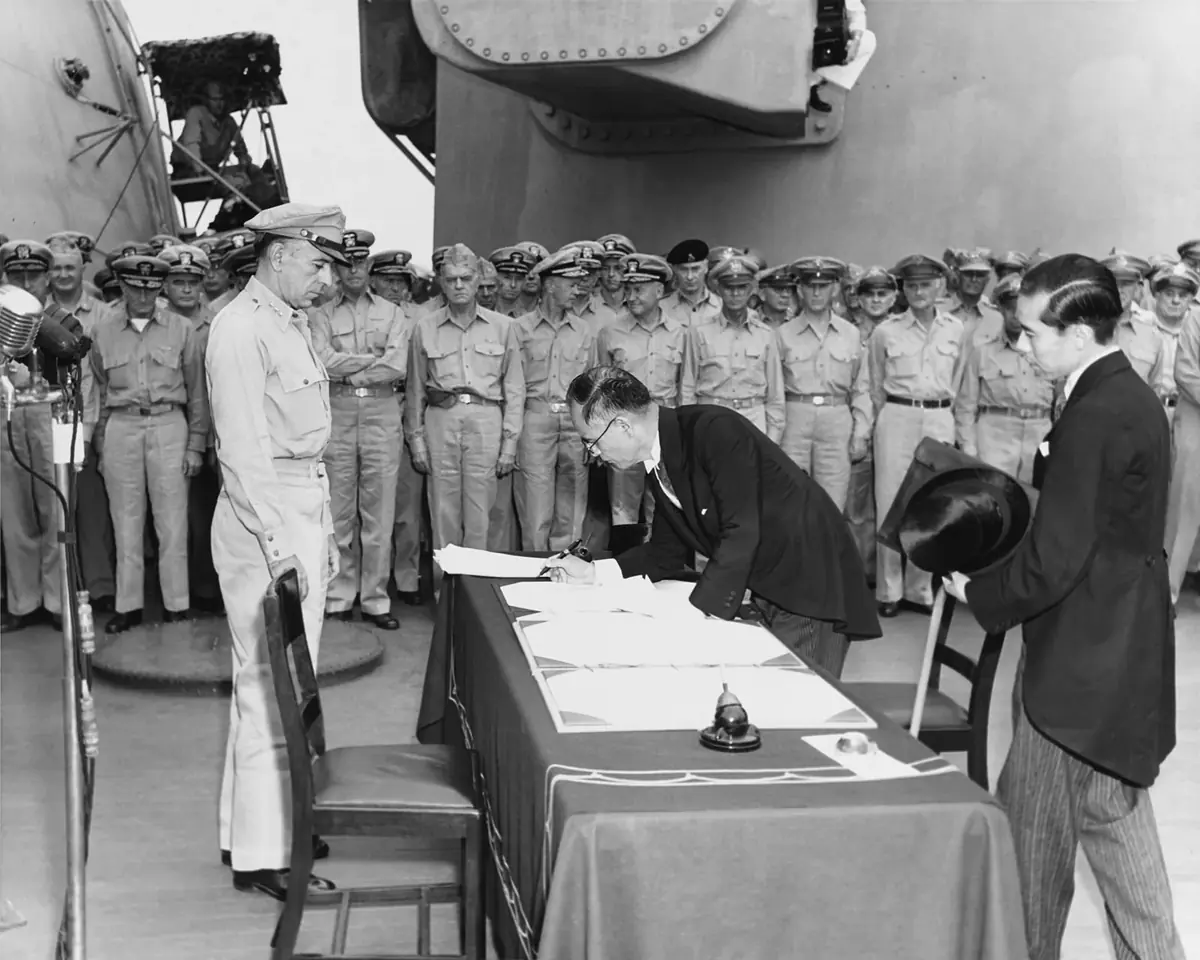
Foreign Minister Mamoru Shigemitsu signs for the Japanese government aboard USS Missouri. Source: U.S. Army Signal Corps / NARA
05 / 1945.08.09 · THE NUCLEAR WARNING
On 9 August 1945, Nagasaki was subjected to an atomic bombing. Whatever the wider wartime narrative, the vast and lasting harm nuclear weapons cause to civilians must never be romanticized. This image comes last so that every remembrance of victory returns to one promise: never again.
Image: the atomic cloud over Nagasaki, 9 August 1945, photographed by Charles Levy; a U.S. government public-domain work. View archive